


Experience spiritual purity and heritage with Eat Walk Talk Tour.
Get to Know the Vegetarian Festival in Thailand: History, Rituals, Food & Sacred Shrines 🏮✨
Every autumn, during the first nine days of the ninth lunar month on the Chinese calendar, Thailand transforms into the stage for one of the world's most intense, deeply spiritual, and visually mesmerizing religious spectacles: the Vegetarian Festival, known locally as Tesagan Gin Je (เทศกาลกินเจ) or the Nine Emperor Gods Festival (เทศกาลเก้าอ๊วงเจ). Throughout this sacred period, streets across the kingdom flutter with bright yellow triangular flags bearing the red Chinese character "เจ" (Je), marking thousands of street stalls, restaurants, supermarkets, and convenience stores that have completely eliminated all animal products and pungent alliums from their kitchens.
While the festival is celebrated with peaceful reverence, yellow-flag night markets, and merit-making in cities like Bangkok, it reaches an awe-inspiring, trance-fueled zenith on the southern island of Phuket. Here, devotees known as Ma Song (the "horses of the gods") undergo dramatic acts of body piercing, firewalking, and bladed-ladder climbing to invoke spiritual blessings and absorb bad karma on behalf of the community. Whether you are a curious traveler eager to sample inventive plant-based Thai cuisine or a cultural explorer seeking to understand ancient Taoist traditions, this comprehensive guide explores the rich history, spiritual rules, astonishing rituals, and top destinations for celebrating the Vegetarian Festival in Thailand. To discover more about Bangkok's Chinese roots, read our feature on Yaowarat: A Cross-Century Journey.
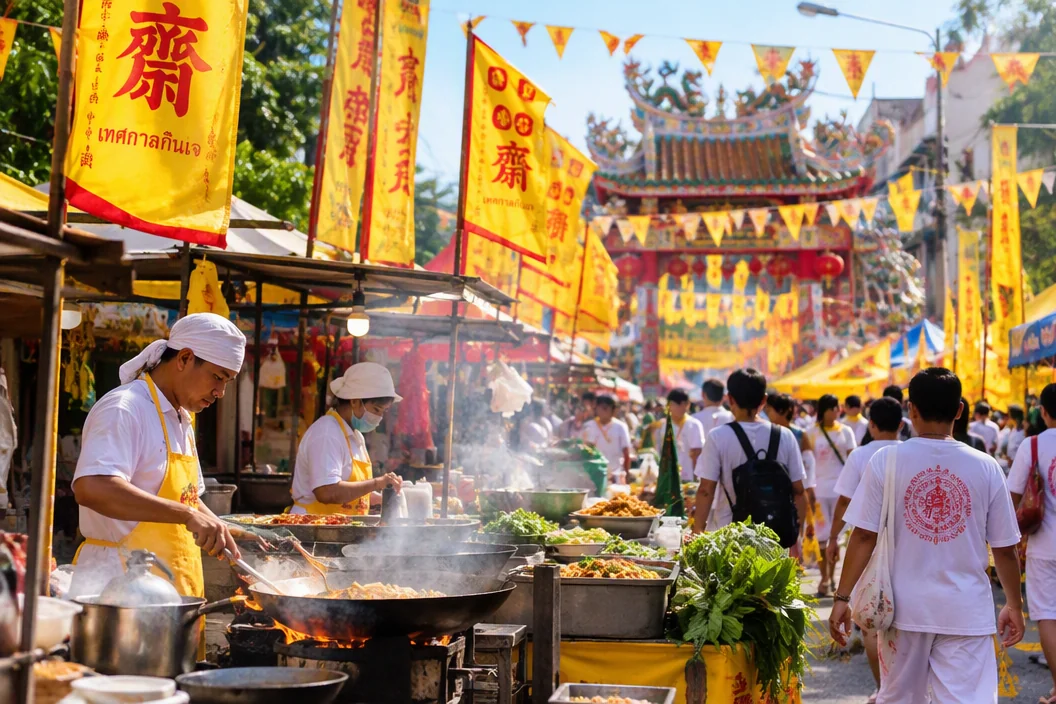
🟡 Festival Quick Facts: The festival occurs annually over 9 days, typically falling between late September and mid-October. The observance centers around spiritual purification: wearing pristine white clothing, abstaining from meat, eggs, dairy, and 5 pungent alliums, and performing acts of charity. The epicenters of the festival are Phuket (for trance rituals and street processions) and Bangkok’s Yaowarat Chinatown (for massive street food night markets).
The Fascinating Origins: The Legend of Kathu, Phuket (1825)
The origins of Thailand’s Vegetarian Festival trace back to 1825 in the tin-mining town of Kathu on the island of Phuket. During that era, Phuket was experiencing a massive influx of Chinese immigrant miners from Fujian and Guangdong provinces. According to historical records, a traveling Chinese opera troupe arrived to perform for the miners but was suddenly struck down by a deadly epidemic of malaria and fever.
Realizing that they had neglected their ancestral religious duties to honor the Nine Emperor Gods (Kiu Ong Iah)—celestial deities associated with the stars of the Big Dipper constellation in Taoist cosmology—the troupe initiated a strict nine-day fast, consuming only pure plant-based foods, performing cleansing rituals, and chanting prayers of repentance. To the astonishment of the local miners, every member of the troupe made a swift, complete recovery. Deeply impressed by this spiritual miracle, the local mining community adopted the tradition, which has expanded over two centuries into Thailand's most revered annual purification festival.
The Spiritual Meaning of 'Gin Je' (กินเจ) & The 10 Sacred Rules
The Thai word Gin Je translates literally to "consuming pure, disciplined food." Observing the festival is not merely a dietary choice; it is a holistic mental, physical, and spiritual cleansing. Observant participants commit to upholding ten core guidelines:
- 1. Strict Abstinence from Animal Products: No meat, poultry, seafood, blood, animal fat, cow's milk, butter, cheese, or eggs.
- 2. Elimination of the 5 Pungent Alliums (ผักมีกลิ่นฉุน 5 ชนิด): Practitioners avoid garlic, onions/shallots, scallions/green onions, Chinese chives, and tobacco/asafoetida. Traditional Chinese medical belief holds that these pungent plants inflame the passions, disturb meditation, and agitate the heart and liver.
- 3. Dedicated Kitchen Utensils: Shrines and strictly observant households use separate pots, pans, plates, and cutlery that have never touched animal flesh.
- 4. Wearing Pristine White Clothing: Devotees dress in white shirts and trousers throughout the nine days to symbolize purity, humility, and equality before the gods.
- 5. Moral Purity and Speech: Participants refrain from lying, cursing, gossiping, or displaying anger (Jai Yen).
- 6. Abstinence from Alcohol & Intoxicants: Total sobriety is maintained to keep the mind lucid and calm.
- 7. Sexual Abstinence: Couples observe celibacy during the nine-day observance.
- 8. Cleanliness and Hygiene: Regular bathing and wearing clean attire before praying at Chinese shrines.
- 9. Funeral and Mourning Restrictions: Persons in active mourning or pregnant women traditionally refrain from entering shrine inner sanctums to maintain spiritual equilibrium.
- 10. Acts of Merit & Compassion: Free food kitchens (Rong Je) operate at shrines to feed all community members regardless of wealth or background.
Phuket's Trance Rituals: The Mystery of the 'Ma Song'
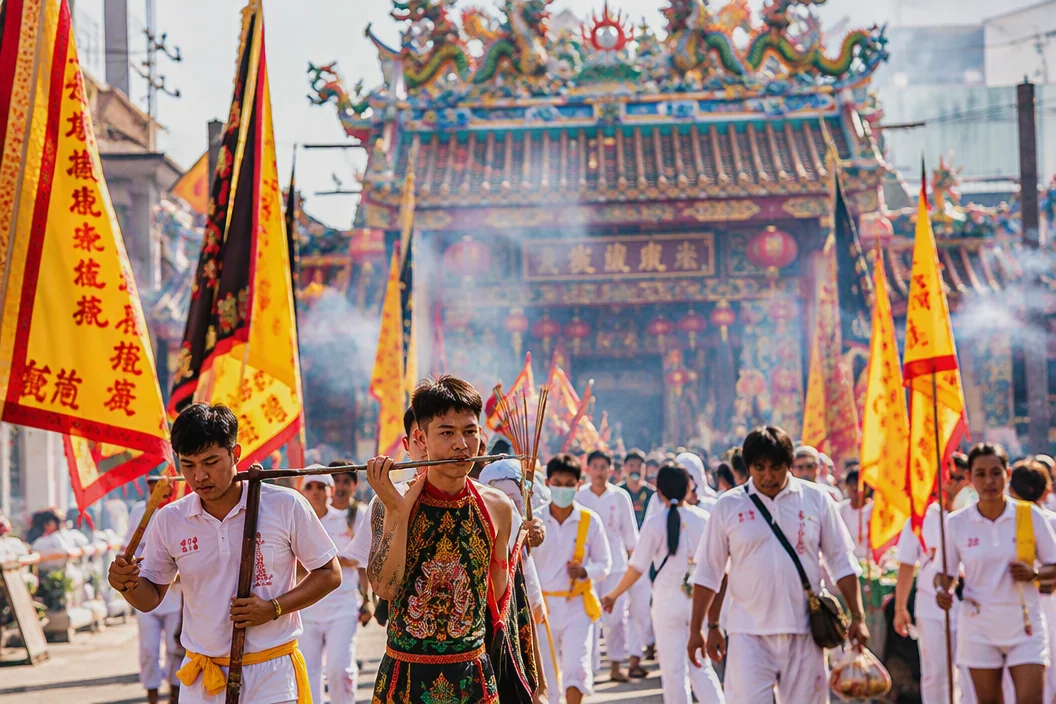
While the festival is celebrated peacefully across Thailand, the island of Phuket presents an intense and surreal dimension found nowhere else. At historic Chinese shrines such as Jui Tui Shrine, Bang Neow Shrine, and Kathu Shrine, chosen devotees become possessed by the spirits of warrior deities, entering deep hypnotic trances. These individuals are known as Ma Song (literally "Horses of the Gods").
In this heightened spiritual state, the Ma Song perform extraordinary mortifications of the flesh without showing signs of pain or bleeding. During morning street processions, they pierce their cheeks, tongues, and arms with an array of objects—traditional swords, lances, silver needles, and elaborate symbolic iron rods. They walk across beds of glowing charcoal embers, climb ladders made of 72 razor-sharp bladed rungs barefoot, and bathe in boiling herbal oil. Believers hold that the deities inhabit the physical bodies of the Ma Song to absorb evil spirits, negative karma, and illness from the surrounding community, purifying the town for the coming year.
The 9-Day Festival Timeline: Sacred Rites & Processions
- Day 1 | Raising the Go Teng Pole: Shrines erect a towering bamboo pole (Go Teng Pole) adorned with gold leaf to signal the Nine Emperor Gods to descend from the heavens. At midnight, nine lantern lamps are hoisted to the pole’s summit, officially opening the festival.
- Days 2 to 8 | Street Processions & Tests of Faith: Each morning, different shrines take turns marching through town. Devotees set up tables in front of homes laden with tea, fruit, and firecrackers to receive blessings from passing Ma Song. In the evenings, rituals like firewalking (Lui Fai) and bladed ladder climbing test the purity of the spirit mediums.
- Day 9 | Farewell Ceremony to the Emperor Gods: On the final night, colossal crowds gather to escort the deities back to heaven. Millions of firecrackers detonate across Phuket Town and Bangkok’s riverside, turning the night sky into a smoky roar of light before the sacred lanterns are lowered at midnight.
Bangkok's Culinary Wonderland: Yaowarat Chinatown
In contrast to the intense physical rituals of Phuket, the celebration in Bangkok's Yaowarat Chinatown is an exuberant, joyous celebration of vegetarian gastronomy. The entire 1.5-kilometer stretch of Yaowarat Road and surrounding alleyways (such as Soi Plaeng Nam and Talad Noi) is pedestrianized and festooned with thousands of glowing red lanterns and fluttering yellow flags.
Hundreds of street vendors prepare an astonishing variety of creative, plant-based delicacies: golden fried tofu and taro cakes served with sweet-and-sour peanut dip, mock roasted pork belly crafted from pressed soy protein and seaweed skins, vegetarian fishball noodle soups, steamed mushroom dumplings, and rich vegan curries flavored with coconut milk and pumpkin. The festive atmosphere is completed by colorful Chinese opera performances, dragon dances, and merit-making rituals at Wat Mangkon Kamalawat (Leng Noei Yi) and the Chow Sue Kong Shrine in Talad Noi. For walking tour advice, see our Bangkok Chinatown Walking Tour.
Frequently Asked Questions (FAQ) About Thailand's Vegetarian Festival
คำถามที่พบบ่อยและข้อมูลสำคัญที่คุณควรรู้ รวบรวมโดยผู้เชี่ยวชาญท้องถิ่น
Q1 What is the exact difference between 'Gin Je' (กินเจ) and standard vegetarianism?
Standard vegetarianism (Mangsawirat) simply excludes meat, poultry, and fish, often permitting dairy and eggs. In contrast, Gin Je is a strict spiritual fast: it forbids all animal flesh, eggs, dairy products, honey, and animal fats, and strictly excludes the five pungent alliums (garlic, onions, scallions, chives, and asafoetida). It also requires clean, dedicated cooking utensils that have never touched meat.
Q2 When does the Thailand Vegetarian Festival take place each year?
The festival dates change annually because they follow the traditional Chinese lunar calendar. It begins on the eve of the 9th lunar month and lasts for 9 days, which typically aligns with late September or October on the Western Gregorian calendar.
Q3 What does the yellow flag with the red character mean?
The yellow triangular flag with the red character "เจ" (Je) signifies that a food cart, restaurant, or packaged food product complies strictly with the festival's dietary laws. Yellow symbolizes religious purity and royal virtue, while red represents good fortune and positive life energy.
Q4 Why do festival attendees wear all-white clothing?
Wearing white clothes is an ancient Taoist and Buddhist practice symbolizing moral purity, humility, and spiritual readiness to receive divine blessings. It acts as an equalizer, ensuring all devotees appear identical before the Nine Emperor Gods regardless of social status or wealth.
Q5 Is it safe for international tourists to witness Phuket's street processions?
Yes, attending the processions in Phuket Old Town is safe, but requires basic sensory preparation. The atmosphere is loud and intense: thousands of firecrackers (Prathat) are detonated right at street level, and sensory overload is high. Bring earplugs, protective sunglasses, and face masks for smoke, and maintain a respectful distance from the entranced Ma Song.
Q6 Can non-Buddhists and foreign travelers participate in the festival?
Everyone is warmly welcomed to participate, regardless of nationality or faith. You can enjoy the vegetarian food markets, visit Chinese shrines to burn incense, and participate in candle-lit evening circumambulation ceremonies (Wian Thian). Dressing in white is appreciated when visiting active shrine compounds.
Q7 What are the must-try foods during the festival?
Top culinary highlights include:
- Tao Hoo Tod & Phueak Tod: Deep-fried bean curd and shredded taro cakes with crushed peanut sweet chili sauce.
- Pad Mee Je: Stir-fried yellow egg-free noodles tossed with shiitake mushrooms, shredded cabbage, and soy protein.
- Tom Chap Chai Je: Rich, slow-simmered Chinese vegetable and mushroom stew seasoned with soy sauce.
- Pla Krapong Je: Realistic mock deep-fried fish made from soy protein, wrapped in seaweed sheets to mimic fish skin.
- Kanom Krok: Traditional coconut-rice pudding pancakes served warm with sweet corn and taro bits.
Q8 How are the realistic mock meats created in Thai Je cooking?
Thai-Chinese culinary masters utilize textured soy protein (TVP), wheat gluten (seitan), konjac root, and diverse mushrooms (shiitake, king oyster, snow fungus) seasoned with white pepper, fermented soybean paste, and seaweed sheets to replicate the fibrous texture and savory taste of pork belly, chicken, and seafood without using animal derivatives.
Q9 What photography etiquette should I follow during shrine rituals?
Photography is widely permitted, but maintain absolute reverence. Never step across ritual boundaries or walk between a praying devotee and a shrine altar. Avoid using flash directly in the faces of entranced Ma Song, and wear white clothing to blend respectfully into the crowd.
Q10 Where is the best place to experience the festival if I cannot visit Phuket?
If you cannot travel to Phuket, Bangkok’s Chinatown (Yaowarat) is the premier destination. The street food festival here is one of the largest in Asia. Other excellent regional centers include Hat Yai in Songkhla province and Trang, both of which preserve longstanding Southern Thai-Chinese heritage.
Q11 Do major supermarket chains and convenience stores participate in the festival?
Yes! During the nine festival days, almost every major supermarket, shopping mall food court (such as Siam Paragon, CentralWorld, and ICONSIAM), and convenience store (like 7-Eleven) across Thailand offers extensive dedicated Je food sections marked with yellow flags.
Q12 What happens on the final night of the festival?
On the ninth and final night, the Nine Emperor Gods are ceremoniously escorted back to heaven and the sea. In Phuket, hundreds of thousands of worshippers march through Phuket Town down to Saphan Hin pier amidst deafening firecracker barrages. In Bangkok, worshippers gather at riverfront shrines along the Chao Phraya to float paper lanterns and pray for blessings.


.webp&w=1920&q=75)
.webp&w=1920&q=75)