


Uncover the secrets of the past with Eat Walk Talk Tour.
Ways to Learn the History of Bangkok: From Ancient Palaces to Living Heritage Streets 🏛️📜
Bangkok is a city of extraordinary temporal contrasts. Step off a sleek, air-conditioned BTS Skytrain viaduct and into an alleyway, and you are instantly transported two centuries back into an era of gold-leaf temple spires, wooden stilt houses along tidal canals, and fragrant Joss-stick smoke rising from centuries-old ancestral Chinese shrines. Known officially in Thai by its poetic ceremonial name—Krung Thep Maha Nakhon (กรุงเทพมหานคร)—the metropolis is relatively youthful compared to ancient European capitals like Rome or London, yet its brief 240-year trajectory has been packed with high drama, profound geopolitical diplomacy, architectural metamorphosis, and rich cultural synthesis.
Founded in 1782 by King Rama I (King Buddha Yodfa Chulaloke) following the tragic destruction of the ancient Siamese capital of Ayutthaya by Burmese armies in 1767, Bangkok was meticulously planned as a sacred recreation of the celestial city of Ayutthaya. Over the ensuing two and a half centuries, the Chakri Dynasty transformed Bangkok from a fortress citadel encircled by canals into a grand modernized kingdom that skillfully preserved its sovereignty throughout the colonial era. To truly understand Bangkok today, you must uncover its multi-layered past. For deep dives into historic neighborhoods, explore our Yaowarat Cultural Journey Guide and trace waterway history in our Canal Boating & Kayaking Guide.
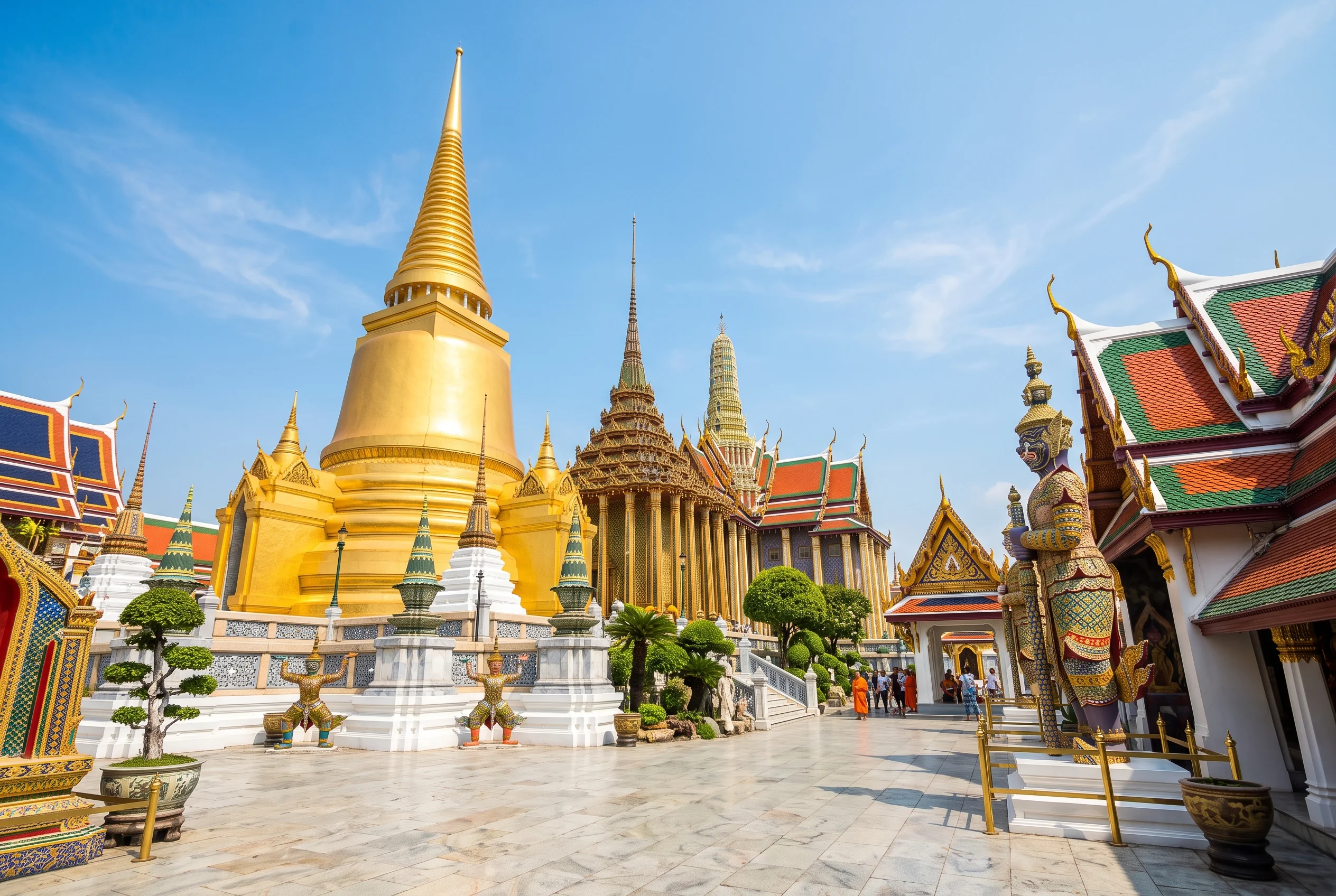
🏛️ Bangkok History Chronology: (1) 1767–1782: King Taksin the Great establishes Thonburi on the western riverbank. (2) 1782: King Rama I establishes the Chakri Dynasty and moves the capital east to Rattanakosin Island, building the Grand Palace and Wat Phra Kaew. (3) 1851–1910: Modernization under King Rama IV and King Rama V (roads, telegraphs, European neoclassical palaces, and the abolition of slavery). (4) 1932: Transition from absolute monarchy to constitutional democracy.
1. The Epicenter of Royal Heritage: Rattanakosin Island
The foundational heart of historical Bangkok is Rattanakosin Island (เกาะรัตนโกสินทร์), an artificial island carved out between the sweeping curve of the Chao Phraya River and defense moats dug by royal soldiers (Khlong Khu Mueang Doem and Khlong Rop Krung). Walking through this historical district brings you face-to-face with the kingdom's most sacred monuments:
The Grand Palace and Wat Phra Kaew (The Temple of the Emerald Buddha)
Constructed in 1782, the Grand Palace complex served for over a century as the royal residence of the Siamese monarch and the administrative center of government. Within its sacred compound stands Wat Phra Kaew, home to Thailand’s most venerated religious palladium: the Emerald Buddha (Phra Kaew Morakot), carved from a single piece of flawless green jadeite. Surrounding the temple cloister walls is an astounding 2-kilometer fresco depicting the complete 178 episodes of the Ramakien (the Thai epic adaptation of the Indian Ramayana), painted with gold leaf and mineral pigments.
Wat Pho: Cradle of Traditional Medicine and Ancient University
Predating the founding of Bangkok as an ancient Ayutthaya-era temple, Wat Pho (The Temple of the Reclining Buddha) was transformed by King Rama I and King Rama III into Thailand's first public university. Covering its walls and marble pillars are hundreds of inscribed stone tablets—recognized by UNESCO in the Memory of the World Register—cataloging medical sciences, astrology, poetry, and classical massage pressure points. Wat Pho is home to the breathtaking 46-meter gilded Reclining Buddha and remains the global headquarters for traditional Thai therapeutic massage.
The City Pillar Shrine (San Lak Mueang)
Erected on April 21, 1782, at exactly 06:54 AM according to royal astrologers, the Bangkok City Pillar (ศาลหลักเมือง) marks the spiritual founding moment of the capital. Housed inside an elegant white prang pavilion near Sanam Luang, this acacia-wood pillar represents the spiritual guardian of the city, where locals gather daily to offer fragrant jasmine garlands and lotus buds for good fortune and civic prosperity.
2. World-Class Museums: Immersive Historical Walkthroughs
To contextualize the monuments you see on the streets, Bangkok's premier historical museums provide world-class scholarship and interactive educational exhibits:
1. The Bangkok National Museum: Southeast Asia's Greatest Treasury
Housed within the 18th-century palace of the Prince Successor (Wang Na) next to Sanam Luang, the Bangkok National Museum is the largest museum complex in Southeast Asia. Its vast galleries trace the complete history of Thai art from the prehistoric Ban Chiang bronze culture, Dvaravati Buddhist stone sculptures, Sukhothai golden bronzes, and Ayutthaya royal regalia. Don't miss the Phutthaisawan Chapel with its 18th-century wall murals and the breathtaking Royal Chariot Hall, which houses colossal gilded teakwood funeral carriages used in royal state processions.
2. Museum Siam: Playful Interactive Cultural Exploration
Housed in a grand 19th-century neoclassical European mansion near MRT Sanam Chai, Museum Siam offers a playful, hands-on approach to history. Its permanent exhibition, "Decoding Thainess", uses multimedia installations, interactive games, and tactile displays to examine what constitutes modern Thai identity—ranging from the evolution of royal court dress and street cuisine to popular beliefs in spiritual amulets and folklore.
3. Rattanakosin Exhibition Hall (Nitasrattanakosin)
Situated on Ratchadamnoen Klang Avenue, the Rattanakosin Exhibition Hall is a cutting-edge 4-story multimedia museum. Spanning nine interactive galleries, visitors walk through realistic 3D projections, scaled architectural models, and virtual reconstructions depicting the royal coronation ceremonies, the architecture of the Grand Palace, and the defense of the capital during historical sieges.
3. Living Heritage Neighborhoods: Where History Breathes
Bangkok's history is not confined to glass display cases; it thrives in multicultural riverside enclaves that have preserved distinct cultural identities for centuries:
1. Kudichin (Kudi Chin): The Portuguese-Catholic Enclave
Located on the Thonburi riverbank across from Memorial Bridge, Kudichin was granted to Portuguese mercenaries and merchants by King Taksin in 1767 in gratitude for their military assistance during the defense of Siam. Centered around the pastel-colored Santa Cruz Church, this pedestrian-only village has preserved ancestral Portuguese culinary traditions for eight generations. Visit local bakeries to taste Khanom Farang Kudi Chin, an ancient egg-and-flour sponge cake topped with raisins and dried persimmon baked from a 250-year-old Portuguese recipe.
2. Yaowarat Chinatown: The Commercial Engine Since 1782
When King Rama I chose Rattanakosin Island for the new capital in 1782, the thriving Teochew Chinese merchant community residing there was relocated just downriver to Sampheng and Yaowarat. Today, Chinatown remains the world's most vibrant Chinese community outside mainland China. Visit Wat Traimit to marvel at the Golden Buddha—the world's largest solid gold statue weighing an astounding 5.5 tons (dating to the Sukhothai period and concealed beneath plaster for two centuries to hide it from invading armies)—and wander through the labyrinthine Sampheng wholesale market lane.
3. Charoen Krung and Bang Rak: The Modernization Corridor
Constructed in 1861 during the reign of King Rama IV, Charoen Krung Road ("The New Road") was Bangkok's very first paved road built for horse-drawn carriages. This neighborhood became the diplomatic and European merchant epicenter of late 19th-century Siam. Stroll past the French Embassy, the neo-Renaissance Old Customs House (1888), the historic Mandarin Oriental Hotel, and the General Post Office to witness the architectural birth of modern cosmopolitan Bangkok.
4. Historic Teakwood Mansions and Cultural Estates
For an intimate look at domestic life, architecture, and personal history in Bangkok, tour these beautifully preserved historic residential estates:
- The Jim Thompson House: The enchanting residence of American architect and intelligence officer Jim Thompson, who helped revitalize the Thai silk industry in the 1950s before mysteriously vanishing in the Malaysian jungle in 1967. The estate comprises six historic 19th-century teakwood houses transported from Ayutthaya and Bang Krua, surrounded by a lush tropical garden filled with sacred Buddhist sculptures and fine Asian art.
- Suan Pakkad Palace: Once the residence of Prince Chumbhot of Paribatra, this serene estate features eight traditional Thai teak houses and the celebrated Lacquer Pavilion, an Ayutthaya-period gem adorned with exquisite gold-leaf lacquer murals.
- M.R. Kukrit's Heritage Home: The former home of former Prime Minister M.R. Kukrit Pramoj, consisting of five elevated teak houses set in a traditional Khmer-style landscaped courtyard, showcasing traditional Thai aristocratic living.
5. The Essential Day Trip: Ayutthaya Historical Park
To fully comprehend Bangkok's architectural and cultural DNA, you must visit its predecessor: Ayutthaya Historical Park (อุทยานประวัติศาสตร์พระนครศรีอยุธยา). Located just 80 kilometers (approx. 1 hour) north of Bangkok, Ayutthaya was the majestic capital of Siam from 1350 to 1767, celebrated by 17th-century European envoys as one of the wealthiest trading capitals in Asia.
Trekking among the soaring brick prangs of Wat Chaiwatthanaram, Wat Mahathat (famous for the Buddha head cradled inside banyan tree roots), and Wat Phra Si Sanphet reveals the exact architectural blueprints that King Rama I replicated when constructing Bangkok's Grand Palace and temples in 1782.
Frequently Asked Questions (FAQ) About Learning Bangkok's History
คำถามที่พบบ่อยและข้อมูลสำคัญที่คุณควรรู้ รวบรวมโดยผู้เชี่ยวชาญท้องถิ่น
Q1 When was Bangkok founded, and by whom?
Bangkok (officially Krung Thep Rattanakosin) was founded on April 21, 1782, by King Rama I (Buddha Yodfa Chulaloke), the founder of the Chakri Dynasty, who moved the royal capital from Thonburi across the Chao Phraya River to Rattanakosin Island.
Q2 What was the capital of Thailand before Bangkok?
Before Bangkok, the royal capital was Thonburi (1767–1782) under King Taksin the Great, which was established immediately following the catastrophic fall of the ancient capital of Ayutthaya (1350–1767).
Q3 What is the difference between Bangkok and Thonburi?
Thonburi is located on the western bank of the Chao Phraya River and served as the temporary capital for 15 years after Ayutthaya fell. In 1782, King Rama I moved the administrative center to the eastern bank (Rattanakosin), creating Bangkok. Thonburi remained a separate province until being merged into Bangkok in 1971.
Q4 What is the single best museum to learn Thai history in Bangkok?
The Bangkok National Museum near the Grand Palace is the premier institution. It houses Thailand's largest collection of art, religious sculpture, royal chariots, and archeological artifacts spanning prehistoric Ban Chiang culture to modern times.
Q5 What is the story behind the Golden Buddha at Wat Traimit?
The Golden Buddha (Phra Phuttha Maha Suwana Patimakon) is the world's largest solid gold statue, weighing 5.5 tons (approx. 83% pure gold). Cast in the Sukhothai period (13th–14th century), it was covered in thick plaster and colored glass to disguise its value from invading Burmese forces, and its true golden identity was only rediscovered in 1955 when the statue was accidentally dropped during moving.
Q6 What is Rattanakosin Island, and why is it called an island?
Rattanakosin Island is not a natural maritime island; it is an artificial island created in 1782 by excavating wide defense moats (Khlong Khu Mueang Doem and Khlong Rop Krung) connecting to the bends of the Chao Phraya River, creating a completely fortified citadel.
Q7 Who was Jim Thompson, and why is his house famous?
Jim Thompson was an American architect and former OSS intelligence officer who arrived in Thailand during WWII and single-handedly popularized hand-woven Thai silk globally. In 1959, he built a magnificent home from six antique Ayutthaya teak houses. His fame grew after he mysteriously vanished without a trace in Malaysia's Cameron Highlands in 1967.
Q8 How did European colonization affect Bangkok's history?
Thailand (Siam) is famously the only Southeast Asian nation never colonized by European powers. Through the brilliant diplomatic maneuvers, territorial concessions, and modernizing reforms of King Rama IV (Mongkut) and King Rama V (Chulalongkorn), Siam maintained its independence while modernizing its military, legal system, transport, and architecture.
Q9 What is the Kudichin neighborhood famous for?
Kudichin is a 250-year-old Portuguese-Catholic riverfront community in Thonburi founded in 1767. It is famous for Santa Cruz Church and Khanom Farang Kudi Chin, an authentic sponge cake baked from ancestral 18th-century Portuguese recipes.
Q10 Can I visit Ayutthaya as a day trip from Bangkok?
Yes. Ayutthaya is only 80 km north of Bangkok. You can visit easily by taking a 1.5-hour morning train from Krung Thep Aphiwat Central Terminal, booking a guided bus-and-boat tour, or renting a private car for the day.
Q11 What was the first paved road built in Bangkok?
Charoen Krung Road, constructed in 1861 under King Rama IV in response to petitions from Western diplomats and merchants who required paved surfaces for horse carriages, marking the transition from canal transport to wheeled vehicles.
Q12 What is the best way to get around historic Rattanakosin Island?
The best way is by taking the MRT Blue Line to MRT Sanam Chai Station (the most beautiful subway station in Thailand, designed like an imperial palace stateroom). From there, you can walk or ride electric tuk-tuks between the Grand Palace, Wat Pho, Museum Siam, and the river piers.


.webp&w=1920&q=75)
.webp&w=1920&q=75)